


Blood Strike - FPS for all
NetEase Games
Blood Strike is the kind of mobile shooter I can open for a quick match and still find myself playing much later. NetEase Games presents it as an action game, but what matters in practice is how quickly it gets me from the menu into a tense firefight. The free download makes it easy to try, while the Teen content rating is a useful reminder that this is aimed at players who are comfortable with fast gunplay and a more intense competitive mood.
My first impression was not that it was trying to be a slow, realistic military simulator. Its identity is much more immediate: colorful combat spaces, sharp movement, constant pressure and a pace that rewards decisive choices. Blood Strike is strongest when I treat every match as a short tactical sprint rather than a relaxed shooting session. That distinction helps explain both its appeal and its limitations.
The game has built a large audience, with an average rating of 4.3 from around 978 thousand ratings and more than 50 million installs. Those numbers do not make it automatically right for everyone, but they do suggest that its blend of mobile accessibility and competitive action has found a substantial audience. I can see why: the basic loop is easy to understand, yet the difference between surviving and being eliminated often comes down to positioning, timing and how confidently I use the environment.
How Blood Strike Builds Its Playable Mood
A bright combat world with a clear visual purpose
The art direction favors readability over grim realism. Characters, weapons and combat areas are designed to stand apart during a busy encounter, which is important on a phone screen where visual clutter can quickly become frustrating. I never want a shooter to look attractive at the cost of knowing where danger is coming from, and Blood Strike generally keeps its action legible enough for me to make quick decisions.
That visual clarity also shapes the mood. The setting feels like a stylized arena for aggressive competition rather than a documentary version of warfare. The result is energetic instead of oppressive. Even when a match becomes tense, the game keeps a sense of forward motion through its strong colors, animated combat presentation and emphasis on recognizable silhouettes.
Related News

Why WhatsApp Messenger Still Makes Everyday Communication Feel Easy

Jurassic World: The Game Is the Better Dino Tycoon for Strategic Players

Threads in Real Life: Who Should Join, Lurk, or Leave

How SHEIN Turned Shopping Into an Endless Content Feed

How to Make Fortnite Feel Smarter on Mobile

Should You Switch to Microsoft Outlook on Mobile?
This choice may not satisfy players who want a grounded battlefield atmosphere. If you prefer subdued environments, restrained character designs and the feeling of a slower military campaign, this can seem too loud. I personally think the brighter direction suits mobile play because it helps me read a fight while holding a relatively small screen, especially when several effects and players occupy the same area.
Why the setting matters during a match
Blood Strike’s locations are not just backdrops for shooting. I pay attention to routes, cover and the spaces that let me break an opponent’s line of sight. A visually distinctive area is easier to remember, and that makes repeated matches more interesting because I gradually build a mental map of where I feel exposed and where I can safely reset after an engagement.
One useful habit is to stop treating every open route as equally valuable. The fastest path is often the most obvious one, so I prefer to approach a contested area from an angle that gives me somewhere to retreat. This is a small adjustment, but it changes the game from constant reaction into planned movement. The setting supports that approach because its visual landmarks help me orient myself quickly.
Gallery
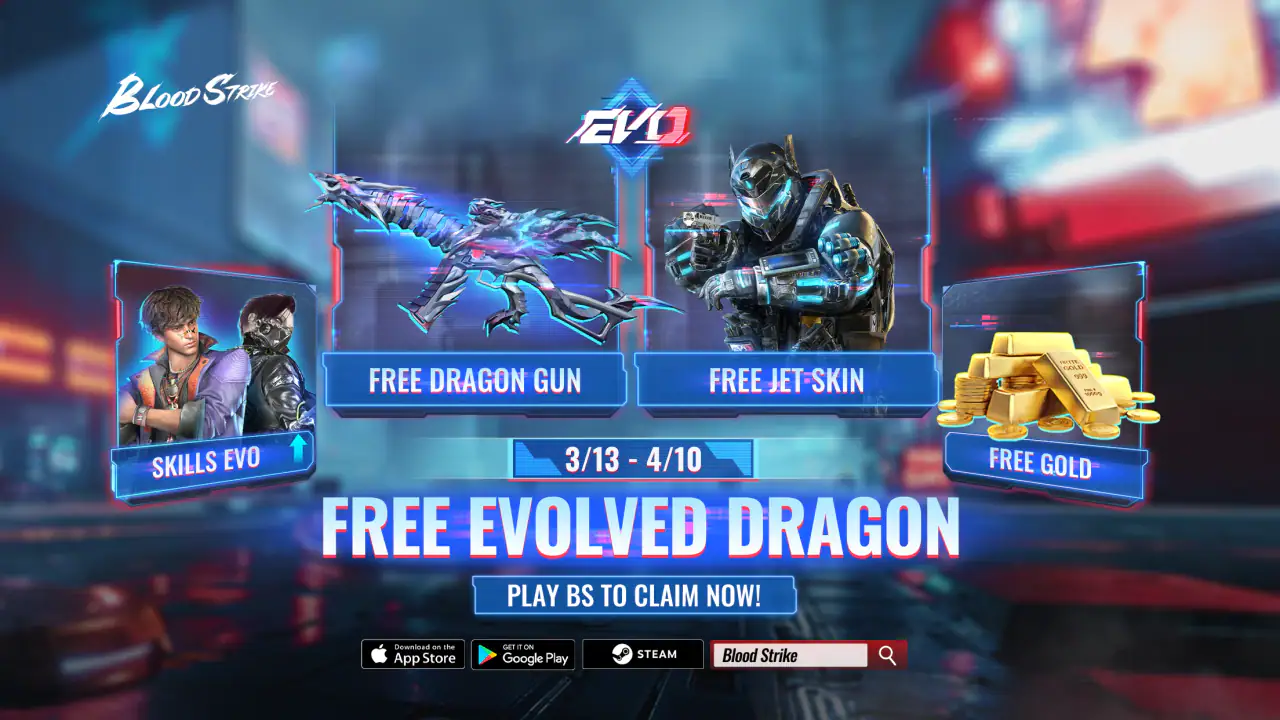
I also recommend lowering the urge to chase every opponent. The art and effects make combat feel urgent, but urgency is not always a signal to advance. If I have already gained a favorable position, holding it for a moment can be more effective than running toward a disappearing target. Blood Strike rewards players who can match its fast visual language without allowing that speed to control every decision.
Sound that keeps the action moving
Sound plays a major role in the game’s rhythm. Weapon fire, movement and combat feedback work together to make encounters feel immediate. I often notice the audio before I fully understand the visual situation: a nearby exchange can tell me that an area is active, while a sudden change in the soundscape makes me reconsider whether pushing forward is sensible.
The audio direction is designed for momentum rather than quiet realism. It keeps the match feeling alive, which fits the game’s action-first personality. That can be exciting during a close fight, but it also means longer sessions may feel mentally tiring. When I want to play several matches in a row, I appreciate taking a short break instead of treating every round as something I must finish immediately.
Headphones can make the experience more informative, but they also make the intensity more noticeable. I would use them when I am trying to concentrate on nearby threats and switch to a lower-volume setup when I am playing casually. The important point is that sound is not merely decoration here: it helps me judge whether I should rotate, hold cover or prepare for an encounter.
Pacing that rewards quick decisions
The pacing is the game’s clearest personality trait. Blood Strike rarely feels content to let me remain passive for long. I am pushed toward decisions about where to move, when to engage and whether a fight is worth taking. That creates a satisfying sense of urgency when I am focused, but it can punish hesitation more severely than a slower shooter would.
For a short evening session, this works very well. I can play without committing to a long single-player story, and each match gives me a clear opportunity to try a different approach. A realistic everyday use case would be a commute or a break between tasks: I can use the time for a few rounds, provided I am comfortable with the possibility that “one quick match” may turn into a longer session.
The trade-off is that the game is not ideal when I want a calm, low-pressure experience. Even a player who is not deeply competitive may feel pulled into the next match after a disappointing defeat. I find it helpful to decide in advance whether I am playing to practice, relax or compete. Without that boundary, the fast loop can make the session feel less refreshing than expected.
Where the mechanics fit the presentation
The mechanics and presentation mostly point in the same direction. The bright art makes targets and landmarks easier to process, the sound reinforces nearby danger and the pacing encourages movement. This coherence matters because the game does not feel like it has a serious visual layer pasted over an unrelated arcade system. Its style tells me how it wants to be played: actively, observantly and with a willingness to adapt.
My most useful mechanical adjustment was to separate aiming skill from decision-making skill. A missed shot is obvious, but a poor approach often causes the miss before the fight even begins. I try to ask three questions before committing: do I have cover, do I know where I can retreat, and am I entering because the situation is favorable or simply because the game feels fast? This workflow has improved my matches more than blindly changing my sensitivity or chasing new equipment.
Another practical tip is to use early encounters as information rather than a test of pride. If an opponent consistently catches me while I cross open ground, the answer is not always to challenge them again. I can rotate, wait for a better angle or let another fight change the situation. Blood Strike’s quick tempo makes patience feel unnatural, which is precisely why a controlled pause can be so valuable.
Players coming from traditional mobile shooters will recognize the broad appeal: direct controls, immediate firefights and a focus on repeated matches rather than a long narrative campaign. Compared with a slower tactical alternative, Blood Strike gives me less room to solve a situation through careful preparation. Compared with a lightweight arcade shooter, it asks more of me in terms of positioning and awareness. Its middle ground is appealing, but it may not fully satisfy either extreme.
Performance expectations and the cost of convenience
The game supports devices running Android 5.0 or later, and the current version is 1.003.650013. That makes the entry point broad, but a compatible operating system does not guarantee the same experience on every phone. On mobile, sustained action can expose weaknesses in touch response, heat management or battery endurance. I would test a short session first rather than assuming that a device capable of installing the game will also deliver the smoothest competitive play.
Touch controls are convenient, yet they demand practice. Small mistakes become expensive when I am trying to aim, move and react at the same time. I prefer to spend a few matches learning the control layout before judging my performance. Early losses can come from unfamiliar input rather than poor tactical understanding, and that distinction prevents me from abandoning the game too quickly.
The free price is another strength because I can evaluate the core experience without paying upfront. In-app purchases range from $0.29 to $99.99 per item, so I would approach the store carefully and decide what I am comfortable spending before browsing it. The important personal rule is simple: purchases should support enjoyment, not become a response to frustration after a loss.
That spending range may be uncomfortable for families, especially with a Teen rating and a competitive loop that encourages repeated play. I would use the platform’s purchase controls and discuss spending expectations with younger players. The game is easier to recommend when everyone treats optional purchases as a boundary to manage rather than as part of the pressure to keep up.
Who will enjoy it, and who should skip it
I would recommend Blood Strike to players who want a fast mobile FPS with a strong visual identity and enough tactical tension to make positioning matter. It suits someone who enjoys learning routes, improving reactions and replaying matches to correct one mistake at a time. It is also a good fit for players who dislike waiting through long introductions and want the action to arrive quickly.
I would be more cautious about recommending it to someone who wants a quiet game, a story-led campaign or highly realistic warfare. Players with limited patience for touch controls may also struggle during the learning period. If competitive defeats affect your mood, the relentless pacing can become tiring rather than motivating. A slower shooter may be better when your priority is deliberate planning, while a simpler arcade game may be preferable if you want minimal mental effort.
For new players, I suggest beginning with one narrow goal per session. Work on staying near cover, then focus on recognizing when to disengage, and only afterward worry about taking more aggressive fights. This makes improvement easier to notice. It also prevents the common mistake of trying to fix aim, movement, map knowledge and decision-making all at once.
My final view of the atmosphere and action
What stays with me is the consistency between Blood Strike’s art, sound and tempo. The colorful combat world makes the action readable, the audio keeps me alert and the pacing turns even a short session into a concentrated burst of decisions. The mechanics are not hidden behind presentation; the mood exists to support the shooting, movement and positioning that define each match.
There is friction, especially for players who prefer realism, quiet pacing or effortless controls. The competitive loop can also encourage longer sessions than planned, and the presence of purchases means I would set clear spending limits. Those are not minor details, but they are manageable if I approach the game with the right expectations.
After its release on 12 Dec 2023, the game has established itself as a substantial mobile action option rather than a tiny side experience. I would try it because it is free, but I would stay only if its fast rhythm matches my mood. My recommendation is to see Blood Strike as a focused, high-energy FPS for players who enjoy making quick choices under pressure. If that sounds like your kind of session, it is worth installing and learning gradually; if you want calm exploration or realism above all else, another style of shooter will probably serve you better.
Blood Strike succeeds because its atmosphere is playable, not merely decorative. Every visual cue, burst of sound and sudden change of pace pushes me toward the same central question: should I move, fight or wait? When I enjoy answering that question repeatedly, the game feels sharp and rewarding. When I do not, its intensity becomes the very reason I put it down.
FAQs for Blood Strike - FPS for all
What is Blood Strike - FPS for all?
Blood Strike - FPS for all is a fast-paced first-person shooter game available on both Android and iOS. It offers a variety of game modes, including team deathmatch and solo missions. The game features diverse maps and customizable weapons, providing an engaging experience for FPS enthusiasts.
Is Blood Strike free to play?
Yes, Blood Strike is free to download and play. However, it includes in-app purchases that allow players to buy virtual currency and items. These purchases can enhance gameplay, but they are not necessary to enjoy the full game experience. Players can progress and unlock features through normal gameplay.
What are the system requirements for Blood Strike?
Blood Strike requires Android 5.0 or iOS 10.0 and above. It is recommended to have at least 2GB of RAM and a decent GPU for optimal performance. The game size is around 500 MB, so ensure you have sufficient storage space on your device before downloading.
Does Blood Strike support multiplayer gameplay?
Yes, Blood Strike includes robust multiplayer features, allowing players to compete against each other in real-time. You can join friends or match with players worldwide in various modes. The multiplayer experience is enhanced with voice chat, enabling better team coordination.
Are there any parental controls in Blood Strike?
Blood Strike is rated for ages 16+ due to its graphic violence. While there are no specific parental controls within the app, parents can utilize device-level restrictions to manage in-app purchases and screen time. It’s advisable to monitor gameplay to ensure it aligns with personal family values.
Pros
- Smooth and intuitive controls for easy gameplay.
- Diverse range of weapons and gear.
- Frequent updates with new content.
- Engaging multiplayer modes.
- Low latency ensures lag-free experience.
Cons
- In-app purchases can be expensive.
- Occasional server connectivity issues.
- High battery consumption during play.
- Limited offline features.
- Graphics may not suit all preferences.


